Planning Your Vaishno Devi Yatra: Routes, Ropeway, and Tips
Navigate your pilgrimage to Vaishno Devi in Katra with this complete logistical guide. Compare walking routes, book battery cars and ropeways, and plan an extra food day in Jammu.

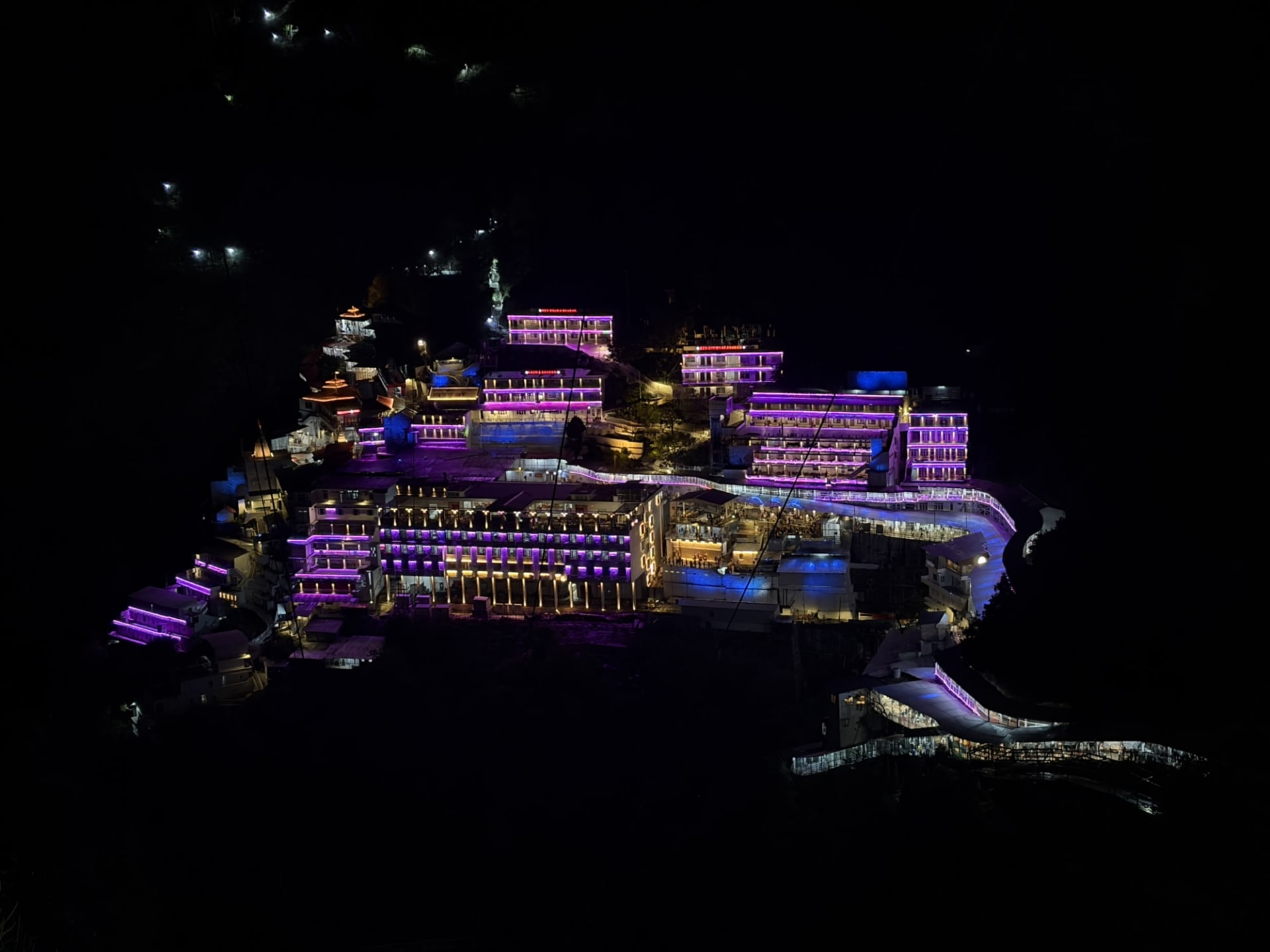
Set against the steep slopes of the Trikuta Mountains in Katra, the holy shrine of Mata Vaishno Devi draws millions of pilgrims every year. A successful trip depends on good logistical planning: navigating registration checkpoints, picking the right trail to save your knees, booking transit services before they sell out, and knowing where to grab a good plate of local Dogra food. Whether you plan to walk every kilometre, take an electric buggy, or board a helicopter, here is an organized, step-by-step blueprint for a smooth yatra, along with a bonus city stopover in Jammu.
Registration First: The Mandatory RFID Yatra Card
Before you tie your shoelaces or head toward the mountain trails, you must obtain your physical RFID Yatra Card. The Shri Mata Vaishno Devi Shrine Board (SMVDSB) provides this chipped card free of cost, and it serves as both your entry access and security pass. You will not be permitted past the security checkpoints at Banganga or Tarakote Marg without physically wearing or presenting it.
Counters operate 24/7 across Katra town:
- Katra Railway Station (SVDK): Convenient for travelers arriving directly by train.
- Yatra Registration Counter (YRC-1): Located near the Katra Bus Stand.
- YRC-2: Situated inside the Niharika Complex.
Keep this card securely around your neck throughout the pilgrimage, as automatic scanners record your passage at key points up to the Bhawan and back down.
Choosing Your Trek: Traditional Track vs. Tarakote & Himkoti
Pilgrims have a choice of routes, and matching your trail to your fitness level makes a substantial difference.
The Traditional Route (via Banganga & Charan Paduka)
This historic path starts at the Banganga Checkpost and spans roughly 12 to 13 km to the Bhawan via Charan Paduka, Adhkuwari, Hathi Matha, and Sanjichhat. It offers dozens of refreshment stops, lockers, and steep flight-of-stair shortcuts. However, it also accommodates horses and ponies (khachhars) and palanquins (palkis). Walking here means sharing a narrow, often crowded path with animal traffic, navigating droppings, and handling steep inclines.
The Better Walking Option: Tarakote Marg to Adhkuwari
For those walking on foot, the dedicated Tarakote Marg (~7 km from the Tarakote entry gate to Adhkuwari) is vastly superior. Ponies and mules are strictly banned from this track. The path features a gradual, knee-friendly incline, continuous overhead rain shelters, clean air, and pristine walking surfaces. Roughly 4 km in, you will find the Tarakote Marg Shrine Board Langar, an immaculate community kitchen serving piping hot dal, rice, roti, and kheer round the clock for free.
The Upper Stretch: The Himkoti Route to Bhawan
At Adhkuwari, rather than tackling the steep climb up Hathi Matha towards Sanjichhat, take the alternate Himkoti Route (~5.5 km). This wide path bypasses Sanjichhat, stays largely level, provides expansive valley views, and avoids animal traffic entirely.
Battery Cars, Ropeways, Helis, and Mules
SMVDSB offers regulated transit options across various sections of the climb:
- Adhkuwari to Bhawan Battery Cars: Eco-friendly electric buggies operate exclusively along the level Himkoti track. Fares are set at ₹450 per passenger uphill (Adhkuwari to Bhawan) and ₹300 per passenger downhill. These can be reserved up to 60 days in advance via
maavaishnodevi.org, with dedicated quotas reserved for senior citizens and differently abled travelers. - Bhawan–Bhairon Ghati Passenger Ropeway: The darshan is traditionally considered incomplete without visiting Bhairon Baba, located on a steep ridge 1.5 km above the Bhawan. Instead of a grueling hike, hop on the passenger ropeway operating between 8:00 AM and 5:00 PM. It climbs the mountain in 3 to 5 minutes for ₹100 per person return. Tickets can be purchased at the Bhawan ropeway token counters or booked online.
- Searli to Sanjichhat Helicopter: Operating between 8:00 AM and 5:00 PM from Searli Helipad (2 km from Katra town) to the Sanjichhat helipad, this 6-to-8-minute flight costs approximately ₹2,320 to ₹2,700 per person one-way (~₹4,640–₹5,400 return). Advance booking through the SMVDSB official portal is essential. Sanjichhat sits higher up the mountain, leaving a gentle 2.5 km downhill walk to the Bhawan. Helicopter operations depend strictly on clear weather.
- Ponies and Porters: If you require a mule (poni) or luggage porter (pithu), hire them strictly via the authorized SMVDSB prepaid kiosks. Regulated rates generally sit around ₹1,200 to ₹1,500 for a pony from Katra to Bhawan one-way, and ₹500 to ₹900 for a luggage porter, protecting you from inflated roadside quotes.
Darshan Protocols and the Garbhjoon Cave Strategy
The Holy Cave Bhawan stays open 24 hours a day, year-round. However, general darshan pauses twice daily for roughly two hours during morning and evening Aarti rituals (~6:00 AM to 8:00 AM and ~6:00 PM to 8:00 PM). Time your arrival at the inner sanctum accordingly to prevent long waits inside the holding corridors.
At Adhkuwari, the narrow Garbhjoon Cave experiences wait times of 8 to 24 hours or more on busy weekends. To visit without wasting your day standing around, present your physical RFID card at the Adhkuwari registration desk immediately upon arrival to secure a token group number. Continue your journey along the Himkoti trail up to the Bhawan, finish your Bhawan and Bhairon Baba darshan, and enter Garbhjoon on your descent when your token group is called.
What to Eat in Katra and What to Buy
The entire Katra pilgrimage belt serves strictly vegetarian food without onion or garlic. For clean, wholesome dining on the trail, stop by the official Shrine Board Bhojanalayas at Adhkuwari, Himkoti, and Bhawan, which serve subsidized meals like Rajma-Chawal, Poori Chhole, and thalis for ₹60–₹120. In Katra town near Asia Chowk, Sagar Ratna serves dependable, high-turnover satvik North and South Indian plates for ₹250–₹400 per person.
Before leaving town, head to Chintamani Chowk in Katra to sample Kalaadi Kulcha (₹60–₹90). Kalaadi is Jammu’s traditional, dense, hand-pressed artisan cheese. Vendors pan-fry it until crisp and brown on the outside and warm and melted inside, packing it into soft, toasted kulchas dressed with fresh mint and tart pomegranate chutney.
For shopping, stroll down Katra Main Bazaar and Jammu Road running near the Bus Stand. Katra is an excellent market for Kashmiri Mamra almonds (around ₹1,100–₹1,800/kg), locally dried walnuts, dried red cherries, walnut wood pooja chowkis, and certified pure saffron (kesar, approx. ₹250–₹350 per gram).
Add a Heritage & Food Day in Jammu
If you have a spare morning or afternoon before your flight or train out of Jammu, spend it exploring the winter capital's heritage landmarks and Dogra cuisine.
Start at the Bahu Fort & Bawe Wali Mata Mandir in the Bahu neighbourhood, perched on a rock face above the Tawi River. This ancient citadel houses the presiding Kali temple of Jammu (entry is ₹10; open 6:00 AM to 8:00 PM). Below the ramparts, stroll through the terraced Bagh-e-Bahu gardens and visit the underground aquarium.
Next, explore the Mubarak Mandi Palace Complex in the Old Heritage Quarter. This sprawling former seat of the Dogra kings blends Rajasthani, European, and Mughal influences over the river valley. Pop into the on-site Dogra Art Museum (₹20 entry, open 10:00 AM to 5:00 PM, closed Mondays) to view delicate Pahari miniature paintings and royal golden bow-and-arrows.
Wrap up with a Dogra culinary trail:
- Rawal Pindi Sweet Shop or Sharma Dhaba: Head to the Old City area near Raghunath Bazaar for rich Dogra Rajma Chawal, finished with desi ghee, sour wild-pomegranate (anardana) chutney, and a side of sweet-and-sour pumpkin Ambal (₹100–₹160).
- Pahalwan’s Food Court: Drop into their Gandhi Nagar or Channi Himmat branches for hot Kachalu Chaat (tangy, spicy taro root), authentic Sund Panjeeri (a nutrient-dense dry-fruit and whole-wheat confection), and rich saffron Kulfi-Falooda (approx. ₹150–₹250).
With an RFID card secured early, the clean surface of Tarakote Marg beneath your boots, and a warm plate of Kalaadi Kulcha at the end, your yatra will feel peaceful, well-paced, and grounded.
Frequently Asked Questions
Where do I collect the mandatory RFID Yatra Card in Katra?
You can collect the free RFID Yatra Card in person 24/7 at Katra Railway Station (SVDK), Yatra Registration Counter 1 (YRC-1) near the Katra Bus Stand, or YRC-2 at the Niharika Complex. It must be collected before you head to the Banganga or Tarakote checkpoints.
What is the difference between the traditional route and Tarakote Marg?
The traditional route begins at Banganga, covers 12-13 km, and allows mules and ponies, which makes it crowded and animal-heavy. Tarakote Marg is an alternate lower path to Adhkuwari (~7 km) strictly reserved for pedestrians, featuring clean concrete tracks, rain shelters, zero mules, and a free SMVDSB langar.
How do battery cars between Adhkuwari and Bhawan work?
Electric buggies operate exclusively along the gentle Himkoti route between Adhkuwari and Bhawan. The fixed fare is ₹450 uphill and ₹300 downhill. Tickets can be booked 60 days in advance on maavaishnodevi.org, with priority access for seniors and differently abled pilgrims.
How do I avoid waiting 15+ hours at the Garbhjoon Cave in Adhkuwari?
Upon reaching Adhkuwari, immediately scan your RFID card at the local token counter to get a queue group number. Instead of waiting around, proceed along the Himkoti path to complete your darshan at Bhawan and Bhairon Temple, then enter the Garbhjoon Cave on your descent when your group number is called.
Is the Bhawan-to-Bhairon Temple ropeway operational all day?
The Bhawan–Bhairon Ghati passenger ropeway generally runs daily from 8:00 AM to 5:00 PM. It covers the steep 1.5 km climb in about 3 to 5 minutes, and return tickets cost ₹100 per person.
More in Katra
Lakshay founded Plota and writes its city guides and field notes: things to do, independent cafés, trails and local events across Indian cities, researched and checked before they're published.